Terra Dwayne Colvin, Jr., Masters Candidate,
Public Presentation in Olin Physical Laboratory, Room #107
Friday, November 30, 2018, at 2:30 PM
Fred Salsbury, PhD, Advisor


The defense will follow.


ABSTRACT

Molecular dynamics (MD) simulations permit the probing of biomolecular systems in both high spatial and temporal resolution. Advances in computing power and techniques combined with the proliferation of online bioinformatics resources enable highly detailed in silico experimental analysis of molecular events. Using the GPU-optimized ACEMD software package, we simulate disease-associated mutants of a zinc finger domain in IKK-gamma known to bind with ubiquitin and analyze the results using a variety of statistical and computational methods.

An overview of the essential physics for MD simulations and the biochemistry of proteins is presented followed by a discussion of the critical role that IKK-gamma plays in the regulation of inflammatory response. Finally, a series of computational experiments to assess the impact of point mutations on the conformational ensemble and dynamics of the NEMO zinc finger domain are detailed and compared to known experimental results.
Printable Version


Professor Divine Kumah,
Department of Physics, North Carolina State University
George P. Williams, Jr. Lecture Hall, (Olin 101)
Wednesday, November 28, 2018, at 4:00 PM


There will be a reception with refreshments at 3:30 PM in the lounge. All interested persons are cordially invited to attend.


ABSTRACT

Complex oxide materials provide a wide range of unique electronic, orbital and magnetic properties which are intimately linked to their atomic scale structure. The ability to form heterostructures comprising of atomic layers of different oxide materials with differing properties has led to the realization of emergent phenomena including multiferroicity, high mobility two dimensional electron gases and superconductivity which are not found in the constituent materials. A key research question relates to understanding the origin of these interface-induced phenomena. Using high-resolution synchrotron diffraction to image the interfacial structures of oxide heterostructures, we show that structural distortions driven by interfacial polar distortions significantly affect their electronic, orbital and magnetic properties.

This talk will focus on rare-earth nickelate and manganite thin films where observed structural distortions affecting the transition metal-oxygen bond lead to metal-insulator and magnetic transitions. Novel approaches will be presented to control atomic distortions and engineer the electronic, orbital and magnetic properties of these systems.

Printable Version

Lauren Nelson, Masters Candidate,
Public Presentation in ZSR Library, Auditorium
Tuesday, November 20, 2018, at 10:00 AM
Dany Kim-Shapiro, PhD, and Sam Cho, PhD, Advisors


The defense will follow.


ABSTRACT

Neuroglobin (Ngb) is a hexacoordinated heme protein closely related to hemoglobin (Hb) and myoglobin (Mb) and normally found in the brain and nervous systems. To protect the brain tissue from hypoxic or ischemic conditions, Ngb increases O2 availability and acts as an O2 sensor. Ngb is believed to play roles in: sustaining ATP production under anaerobic conditions, detoxifying reactive species (O2 and NO), cellular oxygen homeostasis, and reversible binding of O2 with a higher binding affinity than hemoglobin. Tejero et al. previously showed that a mutant form of Ngb reduces nitrite to nitric oxide 50x faster than myoglobin and 500x faster than hemoglobin. Ngb also tightly binds to carbon monoxide (CO) with an association rate that is 500x faster than hemoglobin. Computational simulations and physical investigations were utilized to analyze the structure and kinetics of neuroglobin and the characteristics causing these phenomena. Molecular dynamics simulations of Mb were used as a control to analyze wild-type oxidized human Ngb and mutants for a total of eighteen 1µs trajectories. Time-resolved absorption spectroscopy and flash photolysis experiments were accomplished with Mb and two Ngb mutants. These studies will help identify treatments for diseases involving low nitric oxide availability and carbon monoxide poisoning.

Printable Version

Professor Xifan Wu,
Temple University
George P. Williams, Jr. Lecture Hall, (Olin 101)
Wednesday, November 7, 2018, at 4:00 PM


There will be a reception with refreshments at 3:30 PM in the lounge. All interested persons are cordially invited to attend.


ABSTRACT

Proton transfer via hydronium and hydroxide ions in water is ubiquitous. It underlies acid-base chemistry, certain enzyme reactions, and even infection by the flu. Despite two-centuries of investigation, the mechanism underlying why hydronium diffuses faster than hydroxide in water is still not understood. Herein, we employ state of the art Density Functional Theory based molecular dynamics, with corrections for nonlocal van der Waals interactions, and self-interaction in the electronic ground state, to model water and the hydrated water ions.

At this level of theory, structural diffusion of hydronium preserves the previously recognized concerted behavior. However, by contrast, proton transfer via hydroxide is dominated by stepwise events, arising from a stabilized hyper-coordination solvation structure that discourages proton transfer. Specifically, the latter exhibits non-planar geometry, which agrees with neutron scattering results. Asymmetry in the temporal correlation of proton transfer enables hydronium to diffuse faster than hydroxide and may underlie observed isotope anomalies.

Printable Version

Professor Suzanne E. Barbour, Dean of the Graduate School,
University of Georgia
George P. Williams, Jr. Lecture Hall, (Olin 101)
Wednesday, November 7, 2018, at 4:00 PM


There will be a reception with refreshments at 3:30 PM in the lounge. All interested persons are cordially invited to attend.


ABSTRACT

Despite years of support and interventions, the number of underrepresented minority (URM) students in STEM disciplines continues to lag behind their representation in the general population. For example, only 14,354 African American male graduate students were training in science, technology, engineering, and math (STEM) in 2016 (according to the 2016 Survey of Graduate Students and Postdoctorates in Science and Engineering). This represents only ~2% of all STEM graduate students, while African American males make up ~6% of the U.S. population. Although early efforts were primarily focused on recruiting, the impact of retention programs has become evident in more recent attempts to address this disparity. In this talk, we will focus on a variety of strategies to increase and stabilize the pipeline of URM STEM students. Topics addressed will include the value of holistic admissions strategies, value and limitations of undergraduate summer research programs, importance of building a community, impact of “gateway” programs, significance of supportive mentoring relationships, and power of retention programming.

Printable Version

Dr. Peter G. Wolynes, Bullard-Welch Foundation Professor of Science; Professor of Chemistry, MSNE, and Physics and Astronomy at Rice University,
George P. Williams, Jr. Lecture Hall, (Olin 101)
Wednesday, October 31, 2018, at 4:00 PM
(Colloquium sponsored jointly with WFU Dept. of Chemistry)


There will be a reception with refreshments at 3:30 PM in the lounge. All interested persons are cordially invited to attend.


DR. WOLYNES WILL ALSO HOLD A CLASS WITH DR. SAM CHO ON TUESDAY, OCTOBER 30, FROM 4-5PM IN OLIN PHYSICAL LABORATORY, ROOM 101, THAT WILL GIVE A CLIFF NOTES VERSION OF THIS TOPIC.

ABSTRACT

Protein folding can be understood as a biased search on a funneled but rugged energy landscape.  This picture of the folding mechanism can be made quantitative using the statistical mechanics of glasses and first order transitions in mesoscopic systems.  The funneled nature of the protein energy landscape is a consequence of natural selection, a connection that can also be made quantitative.

I will discuss recent advances using energy landscape ideas to create algorithms capable of predicting protein tertiary structure from sequence.  I will discuss how energy landscape theory also can be used to study the mechanisms of protein aggregation that underlie neurodegenerative diseases such as Alzheimer’s disease and Huntington’s disease.

Printable Version

Dr. Ilias Belharouak, Distinguished Scientist and Group Leader at Oak Ridge National Laboratory
George P. Williams, Jr. Lecture Hall, (Olin 101)
Wednesday, October 24, 2018, at 4:00 PM
(Colloquium sponsored jointly with WFU Dept. of Chemistry)


There will be a reception with refreshments at 3:30 PM in the lounge. All interested persons are cordially invited to attend.


ABSTRACT

The worldwide growing integration of renewable energies and electric vehicles will require massive deployment of energy storage solutions. The aim of this seminar is to discuss the potential of batteries to stabilize the grid whilst storing energy, understand various types of batteries used to store energy and address battery life expectancy, and how it can be maintained for maximum efficiency. A case study centered around a 250kW/500kWh lithium-ion battery coupled with a 200kW PV-plant represents an opportunity for investigating the cycling conditions and aging behavior of a grid-connected Li-ion battery. In a second part, the application of the LNMO/LTO cell chemistry will be discussed in the light of recent results which anticipate the potential deployment of this lithium-ion battery in both grid-storage and electric vehicles.

Printable Version

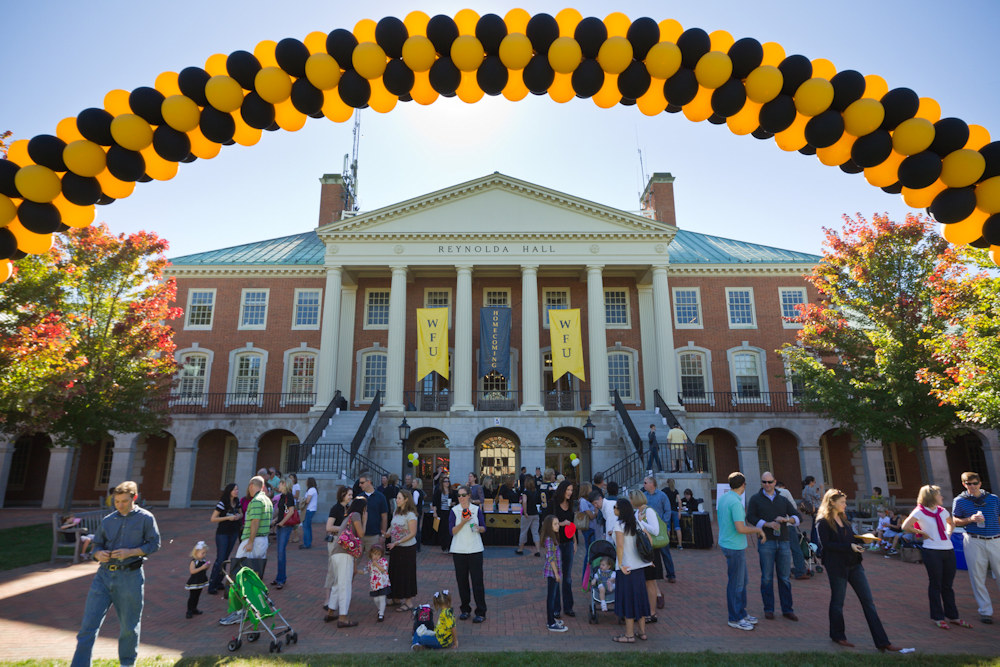
Homecoming bannerThe Physics Department faculty and staff invite you to our Homecoming reception on Saturday, November 3.  As in the past few years, we are having a joint reception with Chemistry and Biology and a lecture demonstration show.  The show is designed to be of interest to everyone including children The lecture demonstrations will begin at 10 am on Saturday morning in room 126 of Winston Hall. This will be followed at 10:45 am by a reception in the lobby of Winston Hall.  Tours of the newly renovated Salem Hall will also be available.

More on Homecoming weekend events across campus.

Read our latest Alumni Newsletter. If you did not receive a copy by email, please contact Rick Matthews, matthews@wfu.edu.

Professor Martin Guthold, Department of Physics, Wake Forest University
George P. Williams, Jr. Lecture Hall, (Olin 101)
Wednesday, October 17, 2018, at 4:00 PM


There will be a reception with refreshments at 3:30 PM in the lounge. All interested persons are cordially invited to attend.


ABSTRACT

Blood coagulation leads to the formation of a blood clot. Blood clots are beneficial in hemostasis as they prevent life-threating blood loss in the event of injury. However, blood clots can also be harmful when they block healthy blood flow (thrombosis); they are the underlying cause of such diseases as heart attacks, stroke and venous thromboembolism, with the first two diseases accounting for 25% of deaths worldwide.

Blood clots perform the mechanical task of stemming the flow of blood. To improve our understanding of blood clots it is, therefore, important to understand their structure and mechanical behavior. The main structural and mechanical component of a blood clot is a mesh of microscopic fibrin fibres.

We have developed an AFM/inverted optical microscope-based technique to study the mechanical behavior of single, microscopic fibers, including fibrin fibres. I will present this technique and the results we have obtained on fibrin fiber mechanical properties, and discuss them in the context of blood clotting, clot lysis, and the properties of other microscopic fibers.


Printable Version

Dava Newman, Phi Beta Kappa Visiting Scholar, Apollo Program Professor of Astronautics, MIT
George P. Williams, Jr. Lecture Hall, (Olin 101)
Tuesday, September 25, 2018, at 4:00 PM


There will be a reception with refreshments at 3:30 PM in the lounge. All interested persons are cordially invited to attend.


ABSTRACT

Recent space science missions to Pluto and Jupiter, the discovery of thousands of exoplanets, and orbital missions to monitor Spaceship Earth will be highlighted. Humanity will become interplanetary, and is on a journey to Mars. We are closer to reaching the Red Planet with human explorers than we have ever been in our history. Space agencies, academia and industry are working right now on the technologies and missions that will enable human “boots on Mars” in the 2030s. We are testing advanced technologies for the next giant leaps of exploration. From solar electric propulsion to cutting edge life support systems, dvanced space suits, to the first crops grown in space, the journey to Mars is already unfolding in tangible ways today for tomorrow.

A three-stage plan will be highlighted – from missions close to Earth involving commercial partners and the International Space Station, advancing to missions in Earth–Moon orbit, or deep space, and finally moving on to Mars, where explorers will be practically independent from spaceship Earth. The innovation required to realize humanity becoming interplanetary cuts across science, human exploration and technology.

Fundamentally, education, knowledge and access are the keys to exploring our solar system, Spaceship Earth, and ourselves. The urgency of education about our own planet is shown through supercomputer data visualizations accessible through online open platforms. The presentation concludes with an inclusive message on STEAMD (science-technology-engineering-arts-math-design) about changing the conversation to include everyone: the artists, designers, poets and makers. We are all astronauts on Spaceship Earth!

Eleanor Roosevelt once said that the “future belongs to those who believe in the beauty of their dreams.”

Note: Professor Newman will also give a public talk Exploring Space for Earth: Earth’s Vital Signs Revealed at 7 PM on Monday, September 24, 2018 at the Porter Byrum Welcome Center.


Printable version